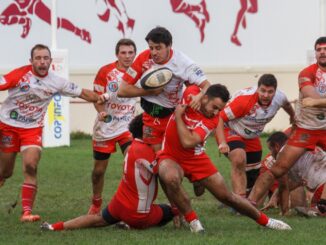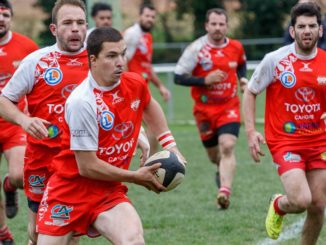
(Pam Smortchevsky photo)
|
The bad thing about American rugby is that it is American rugby: new, inexperienced, without the depth of other countries.
People can argue that each statement has more or fewer attributes to consider, but no one can deny that American rugby needs a tune-up, of sorts, to take the next step onto the big stage.
USA Rugby is a great organization and has done much to foment growth of the sport and organization of coaches, referees and administrators.
As a result of this centralized style of management – necessary and efficient with fewer teams and players – the growth of the sport has been handled and not managed.
Now, all of us in the rugby community find ourselves at a point at which we see where rugby can go. Currently, however, we are being told that we need to support our national team first and that any growth is dependent upon its success.
Hence all the promotion of friendlies and the ridiculous attempts to foist four-team competitions between the USA and Canada as professional rugby, now going into round two, still with national side members.
We are told that from the (eventual) success will spurt – in no order, and certainly not exhaustive as a list: stronger women’s programs, more youth programs and State Based Organizations and even the possibility of a professional league – which in turn will prompt more and better and so on and so forth.
I do not think I speak alone here when I say: hogwash. That is putting the cart before the horse and it is coming from an organization used to being, as stated, centralized.
From that perspective, it makes sense. But it is not going to be successful because, frankly, not enough people care about the men’s national team.
Maybe it is a consequence of seeing the success of rugby 7s with national teams, but the message is confused. The two styles of play might as well be different sports and we are not going to see high level rugby play until we see some understanding of what rugby can be in America.
Here is a simple two step plan to make rugby union successful in the United States:
1. Play matches where people live;
2. Give people local teams to support and cheer on
Matches where people live
Speaking of centralized, USA Rugby is in the middle of the country: Boulder, CO. Maybe that is why games are held out in Colorado. Yet, the highest population density is the NE corridor.
On the other coast, California has an economy and a population larger than most countries; and yet we play games in the middle of the USA.
Clearly, everyone deserves a game, but even if everyone in Boulder, heck, all of Colorado, supported rugby, it would not be viable to support teams. If you are trying to sell a product, you do not take all your supplies to the smallest town you can find and then complain that you cannot sell enough.
You go to the big city and you reach as many people as you can. Simply having more people available means YOU HAVE MORE PEOPLE. Play games in Boston, Philadelphia, New York, Los Angeles, San Francisco.
Put it in front of people, lots of people, and you will find success.
Local Teams
Local teams are what drive the American fan. City to city, across the country, people spend exorbitant amounts of money on jerseys, hats, jackets, gloves, stickers, personal seat licenses (for God’s sake!) because of their local team.
Quick: name the last time you saw a USA men’s national rugby team sweatshirt. Exactly. Make teams local and build from the community.
To do that, get investors on the East Coast together and go over and talk to the Magner’s League and Guinness Premiership and establish 2-3 teams in each league – or just one league to start – and plant them in the heart of the east coast: between Washington, DC, and Boston.
Do the same thing on the West Coast with the Super 14 in SANZAR and now you have 4-9 professional, local, high level rugby teams.
The ultimate benefit of all of this is the increased skill level of rugby and the increased opportunity for our players to continue on in this great sport.
USA Rugby would still be necessary but would need to split into two, distinct but complementary, organizations.
USA Rugby: The sport needs a central, governing body to maintain the youth programs and keep USA rugby in accordance with the IRB.
American rugby: The new teams would need a central administrative center to turn to for all the varieties of professional athletic life, whether it be salaries and benefits or learning how to deal with the media as a professional athlete.
The American rugby landscape is muddled. I do not know why.
It could be because we bring foreigners here to run the program instead of seeking advice and guidance from them (even at a high school level we are not using American concepts for structure, trying to force the European U20 age-grade system in its place); it could be because we confuse Olympic acceptance of rugby 7s as acceptance of rugby XVs; it could be because we confuse American Olympic success in 1924 as proof of a national team first concept in 2009.
I write all this knowing that it is very easy to write and yet the difficulty of enacting something like this is potentially daunting; but the benefits for all are enormous.